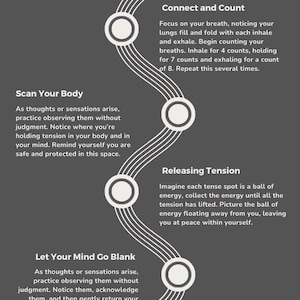
Trauma often leads to shallow, restricted breathing patterns, reflecting a state of hyperarousal or freeze. Conscious breathing exercises help to re-regulate the nervous system, promoting a sense of calm and safety. Bring your attention to your breath, observing its natural rhythm without trying to change it. Gradually, deepen your inhales and exhales, noticing the expansion and contraction of your chest and abdomen. As you breathe, imagine the breath moving through your body, releasing tension and stagnant energy. Experiment with different breathing patterns—slow, deep breaths; short, rapid breaths followed by longer exhales; or alternate-nostril breathing.
Releases Chronic Tension and Pain
This exercise often involves noticing the rise and fall of the chest or belly, allowing breath to become a natural rhythm. Regular practice enhances body awareness and emotional resilience, teaching the body to respond to triggers with greater ease. Mindful breathing can be done anywhere, making it an accessible and effective technique for managing daily stress and promoting relaxation. However, remember to check in with yourself, and if you’re feeling overwhelmed, speak with a mental health professional to aid your recovery. It’s not just an emotional or psychological experience; it leaves a physical imprint. The body’s natural response to threat—the fight, flight, freeze, or fawn response—can become dysregulated, leaving individuals feeling perpetually on edge, even long after the traumatic event has passed.
Download 5 Free Positive Psychology Tools
Furthermore, body scan tips and techniques have become increasingly popular as healing interventions, guiding a person’s focus through different body sensations to promote relaxation and awareness. Research has shown that somatic therapies can be particularly effective in addressing the effects of trauma. For instance, a study on Somatic Experiencing, a type of somatic therapy, found it beneficial in reducing symptoms of post-traumatic stress disorder (PTSD).
Can You Do Somatic Exercises in Bed?
- After you’ve slumped forward, stay there for 10 to 15 seconds and then return to standing by slowly rolling up, vertebrae by vertabrae as you would in yoga.
- Sound healing and vocalization are potent tools in somatic experiencing, facilitating the release of trapped emotions and promoting a sense of groundedness.
- Levine and colleagues propose that SE® can restore interoceptive and premotor cortices in the brain to bring them to an optimal functioning level.
- Engaging with recommended books and resources can significantly enhance personal growth, emotional regulation, and overall well-being.
- This could involve regular mindfulness practices, deep breathing exercises, or gentle physical movements like yoga or stretching.
- Existential therapy provides a space to explore meaning, responsibility, freedom, and identity in life’s inherent uncertainties.
Somatic Experiencing (SE) is a body-mind therapy developed by Peter Levine to address trauma and stress. It focuses on enhancing the body’s ability to process and release physical tension stored during traumatic events. By guiding awareness to bodily sensations, SE helps restore balance to the nervous system. This approach emphasizes gentle, non-invasive interventions, allowing the body to naturally release stored energy and emotions. SE is rooted in the idea that trauma is not just psychological but also physiological, stored in the body’s tissues. Through mindful observation of sensations, individuals can reconnect with their physical experiences, fostering healing and resilience.
Somatic Exercises to Release Trauma
The coach encourages the client to explore their sensory experiences, such as the sensation of touch, pressure, warmth, or reviews of unimeal cold, or their hearing or visual sense. Clients may be invited to touch various objects or to engage in activities that involve sensory feedback to heighten awareness. The main criticism of somatic experiencing is that the evidence base supporting it is currently inadequate. For this reason, it is not yet a viable substitute for more well-researched treatments. Ensure you have soft mats or blankets to support your body as you move through the exercises.
Somatic Therapy Exercises and Techniques
Somatic therapies may involve some form of physical contact with a therapist if you’re going to your sessions in person. This may not work for everyone, especially if physical distress and trauma is part of the reason you’re seeking therapy. You can always ask for more information before starting somatic therapies, including the therapist or counsellor’s experience and training applying this method. Although some somatic experiencing exercises can be done on your own, to truly benefit from this approach, it’s recommended that you work with a trained therapist. According to the somatic experiencing approach, talk therapy may not always be able to access this complex body process.

Developing Your Personal Resource Toolkit
These practices are designed to build your capacity to remain present and regulated when strong emotions or sensations arise. Access to digital resources is a crucial aspect of guided somatic experiencing exercises, allowing individuals to practice and benefit from these exercises at their own pace and convenience. With the availability of digital resources, individuals can access 12 guided somatic experiencing exercises online, providing them with a comprehensive and structured approach to somatic experiencing.
Somatic Immersive Exercises: Unlocking Mind-Body Harmony
This process is instrumental in reducing stress, anxiety, and the emotional impacts of trauma, offering a path to profound healing and recovery. Somatic Experiencing uses your “felt sense” to access physical sensations, behaviors, and emotions internalized from traumatic experiences. You felt sense refers to the changes that occur in your internal landscape as you become more aware of sensations, emotions, and images. This might involve noticing subtle bodily sensations, such as a fluttering in the stomach or tension in the shoulders.
Reasons for Somatic Exercises
Somatic exercises for trauma focus on creating safety and connection within the body. Techniques like shaking, gentle stretching, or orienting to your surroundings help release stored tension and reconnect you to the present moment. These exercises encourage you to notice physical sensations without judgment, allowing the body to process and let go of traumatic energy in a safe and supportive way.
The Power of Somatic Experiencing Therapy: 12 Guided Somatic Exercises
Coaches help leaders develop a deeper understanding of how their bodily sensations, movements, and postures influence their leadership style and presence. You might, for example, remember Amy Cuddy’s research on power poses (Cuddy et al., 2017). Neither standing nor seated somatic exercises are better overall, as each offers unique benefits that can be useful depending on your needs and goals. For example, standing exercises tend to support functional everyday movement, while seated exercises can provide more stability for longer or more restorative sessions.
By focusing on creating a “safe” sensation in your mind and body, you can relieve some distress. Resourcing is about tuning into specific body sensations that may be the opposite of what you’re experiencing at the moment. This is typically a long process that a therapist helps you with, but practicing specific exercises at home could aid you in starting the process. When you practice these body-focused exercises, you focus on physical sensations, instead of thoughts and emotions as you’d do in talk therapy, or your fears as you’d do with exposure therapy. If you’re new to somatic exercise, Choi suggests starting on the ground rather than standing, which can make it easier to tune into your body and notice how it responds to movement. Yoga is a great place to start, she says, especially if you’re having trouble connecting movements with internal sensations.